PANAMA CANAL TO FURTHER REDUCE DRAFT LIMIT FOR NEOPANAMAX VESSELS
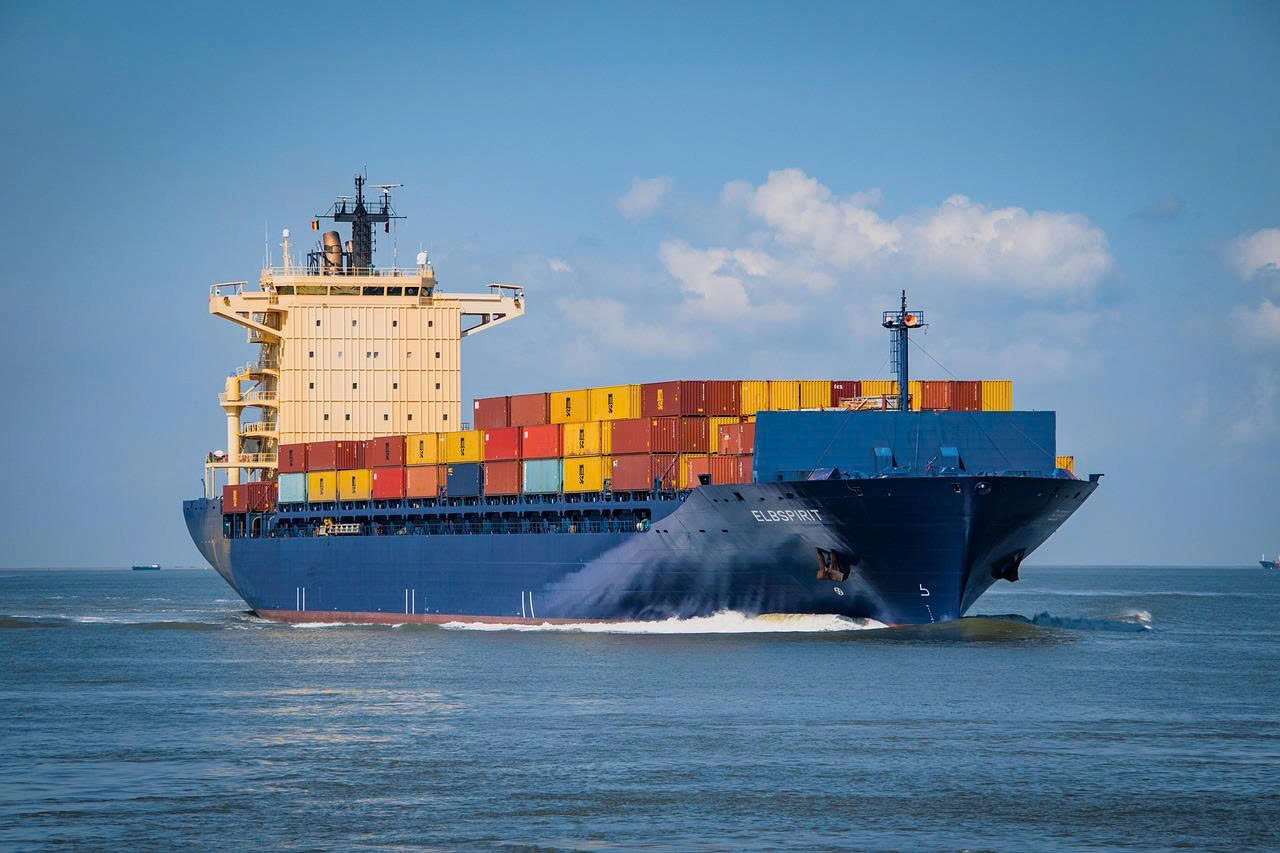
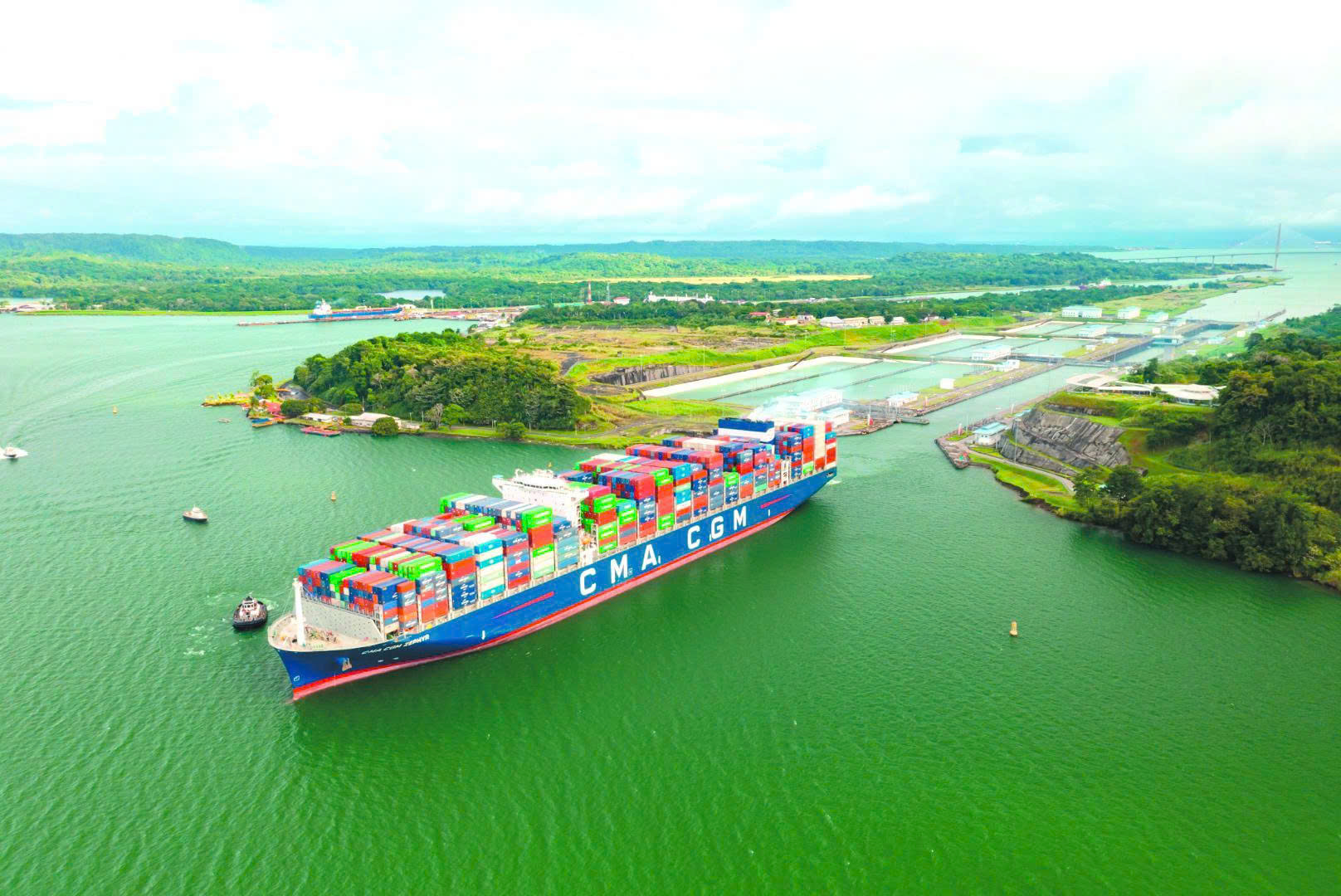
The Panama Canal will further reduce the maximum allowable draft for Neopanamax vessels from late August 2026 as water levels in Gatun Lake continue to decline.

Outside the United States, global demand for Chinese products is hitting new highs. Despite being a major target of U.S. tariffs, China has strengthened its trade relationships across Africa, Southeast Asia, and Europe in 2025. While China cements its role as a global export leader, the U.S. is increasingly shifting its focus toward self-reliance.
In 2024, China’s exports rose 6%, reaching $3.6 trillion, further widening the gap with the U.S. To put it in perspective, over one-third (36%) of the world’s export containers now carry Chinese goods. China is also expected to see record shipment volumes in 2025, particularly across Latin America, Africa, and Asia.
The United States remains the world’s second-largest exporter, recording $2.1 trillion in exports last year. From January to July 2025, Canada and Mexico together made up about 30% of U.S. export demand.
Coming in third, Germany’s exports declined by 1% to $1.7 trillion, while the Netherlands followed with $921 billion.
Meanwhile, Vietnam, Hong Kong SAR, and France recorded the fastest export growth, up 14%, 12%, and 11%, respectively. Vietnam’s surge was driven by strong sales of oil, coffee, and rice, reflecting its growing role in shifting global supply chains.
Overall, China accounted for 14.6% of global exports in 2024, the largest share of any country. In contrast, while several economies experienced double-digit export growth, Australia saw the sharpest decline.
Source: collect
The Panama Canal will further reduce the maximum allowable draft for Neopanamax vessels from late August 2026 as water levels in Gatun Lake continue to decline.
In modern logistics, delays are no longer viewed as mere inconveniences. They can result in significant financial losses, including reduced revenue, dissatisfied customers, increased warehousing costs, disrupted production schedules, and damaged business reputation
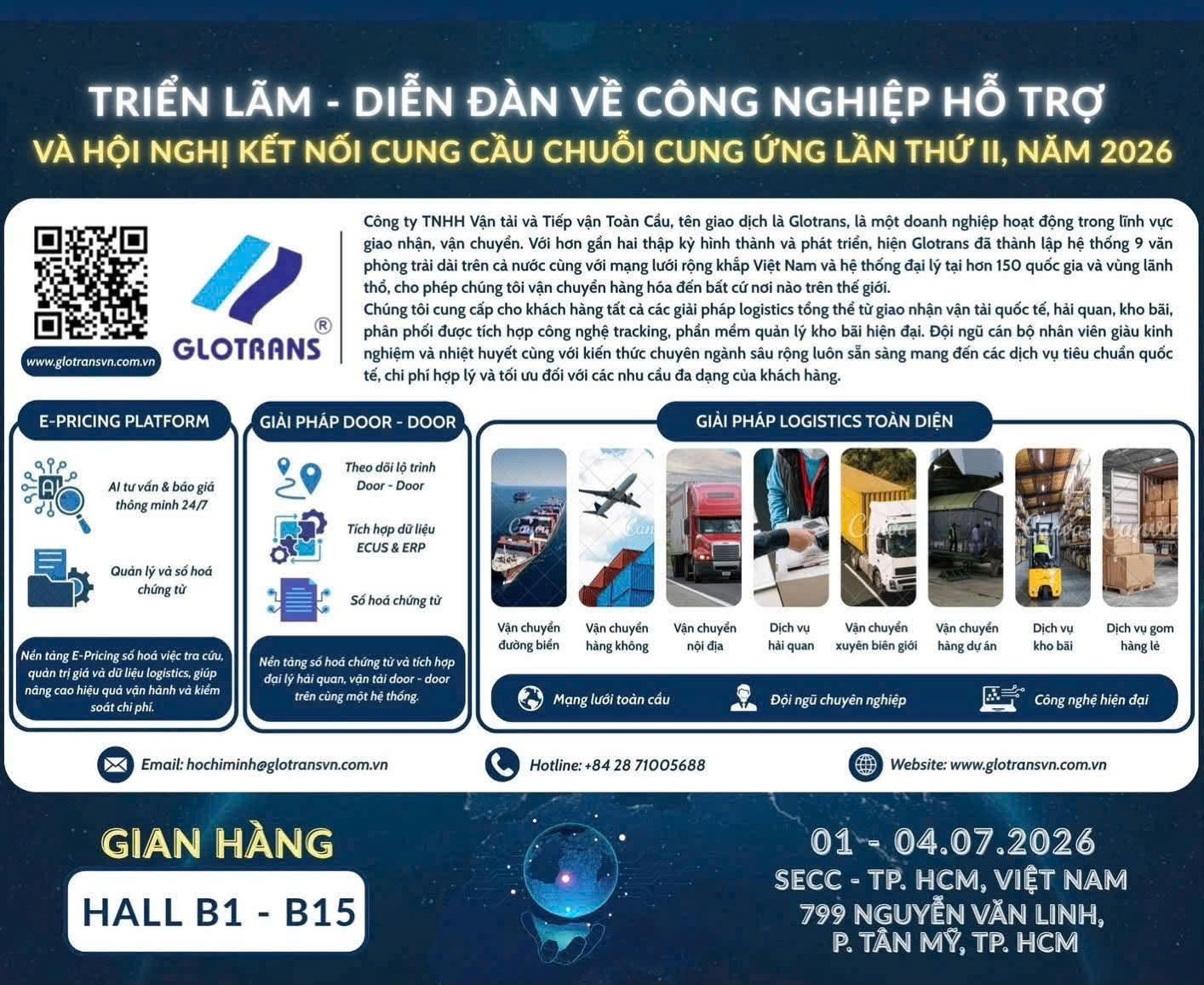
From July 1–4, 2026, Glotrans is participating in MTA Vietnam 2026, one of Vietnam's leading international exhibitions for precision engineering, manufacturing, and supporting industries, held at the Saigon Exhibition and Convention Center (SECC), Ho Chi Minh City.
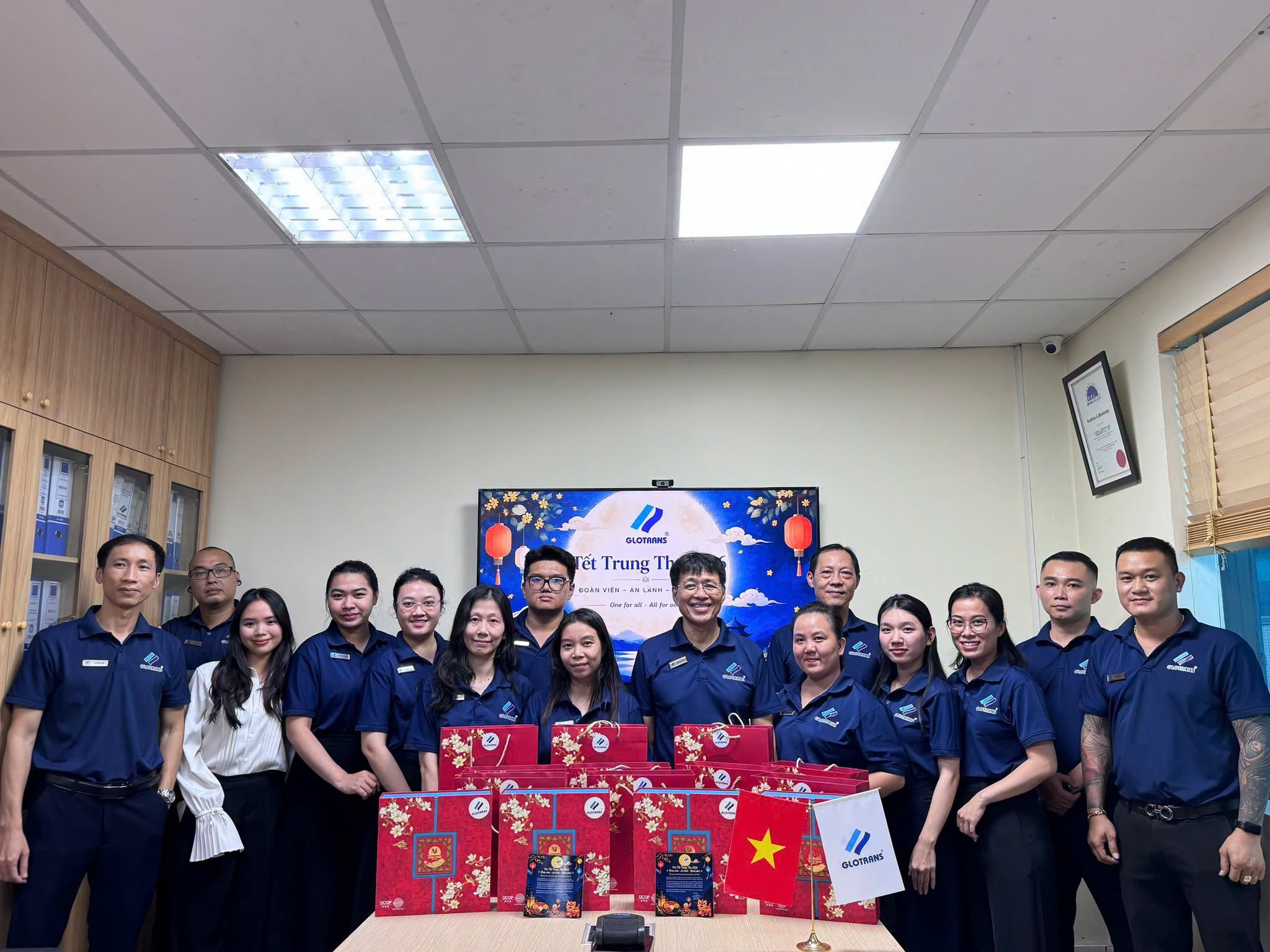
The Mid-Autumn Festival is not only a time for family reunions, but also a special occasion to share love, send warm wishes, and enjoy meaningful moments with our beloved colleagues.
Over the past few days, GLOTRANS’s General Director has been traveling between offices, from Da Nang to Quy Nhon, to personally attend meetings reviewing the business performance of the first six months of the year, assess each office’s operations, and work with the teams to set goals for the next stage.
GLOTRANS would like to inform our Valued Customers and Partners of our holiday schedule for Vietnam’s National Day (2 September 2026) as follows:
The shipment of food additives was transported in container No. FCIU3301688 (20’), under B/L MPRSMUM1806, on the voyage from Nhavasheva Port (India) to Dinh Vu Port (Hai Phong, Vietnam) on 29/04/2017.
Company T (Plaintiff – the Insured) entered into an insurance contract with Company B (Defendant – the Insurer). After the insured event occurred, the Insurer alleged that the Insured had violated its obligation to prevent and mitigate losses. The Arbitral Tribunal acknowledged that such an obligation exists but concluded that the Insured did not breach it.
Under the insurance contract, the premium was to be paid in three installments, and in all three, the insured party was late in payment. When a dispute arose, the insurer (Defendant) argued that the insurance contract had terminated before the insured event occurred due to the late premium payment and therefore refused to make an insurance payout. However, the Arbitral Tribunal held a contrary view.